
The S&P 500 recently surpassed 7,500 for the first time, marking another milestone in a year defined by multiple new all-time highs. Importantly, market gains have been supported by contributions from several sectors rather than a single narrow theme.
At the same time, enthusiasm around artificial intelligence has helped revive interest in initial public offerings (IPOs) after a prolonged slowdown. These developments are occurring despite ongoing concerns around inflation, elevated oil prices, and higher long-term interest rates.
Technology Stocks and Market Leadership
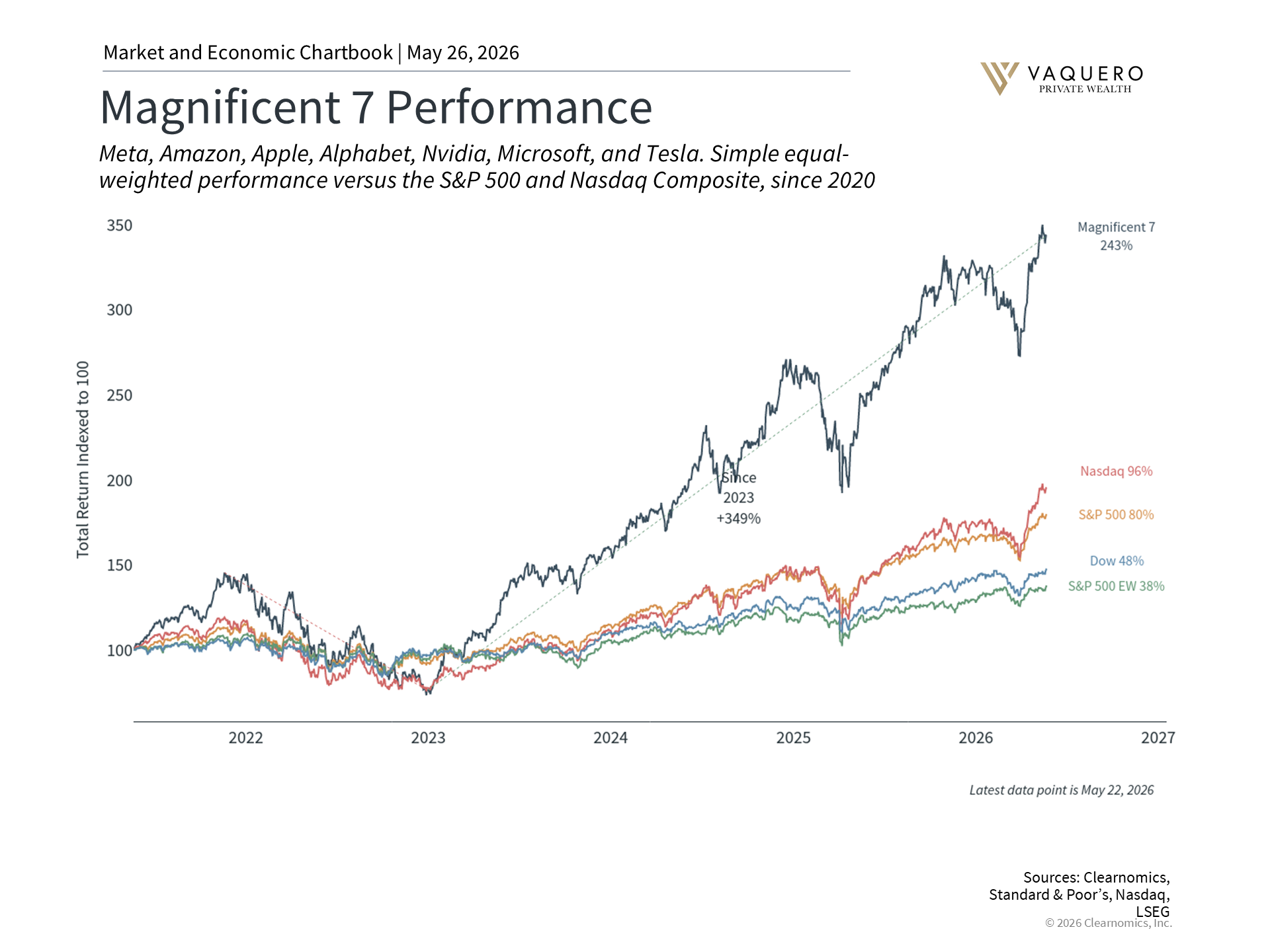
Technology-related companies continue to play a meaningful role in market performance. The so-called “Magnificent 7” now represent roughly one-third of the S&P 500, highlighting the importance of understanding portfolio concentration and diversification.
Strong earnings growth has supported these gains, with Information Technology and Communication Services sectors expected to post above-average earnings growth over the coming year. However, valuations have also increased, making balance across sectors and styles an important consideration for long-term investors.
IPO Activity Is Gradually Returning
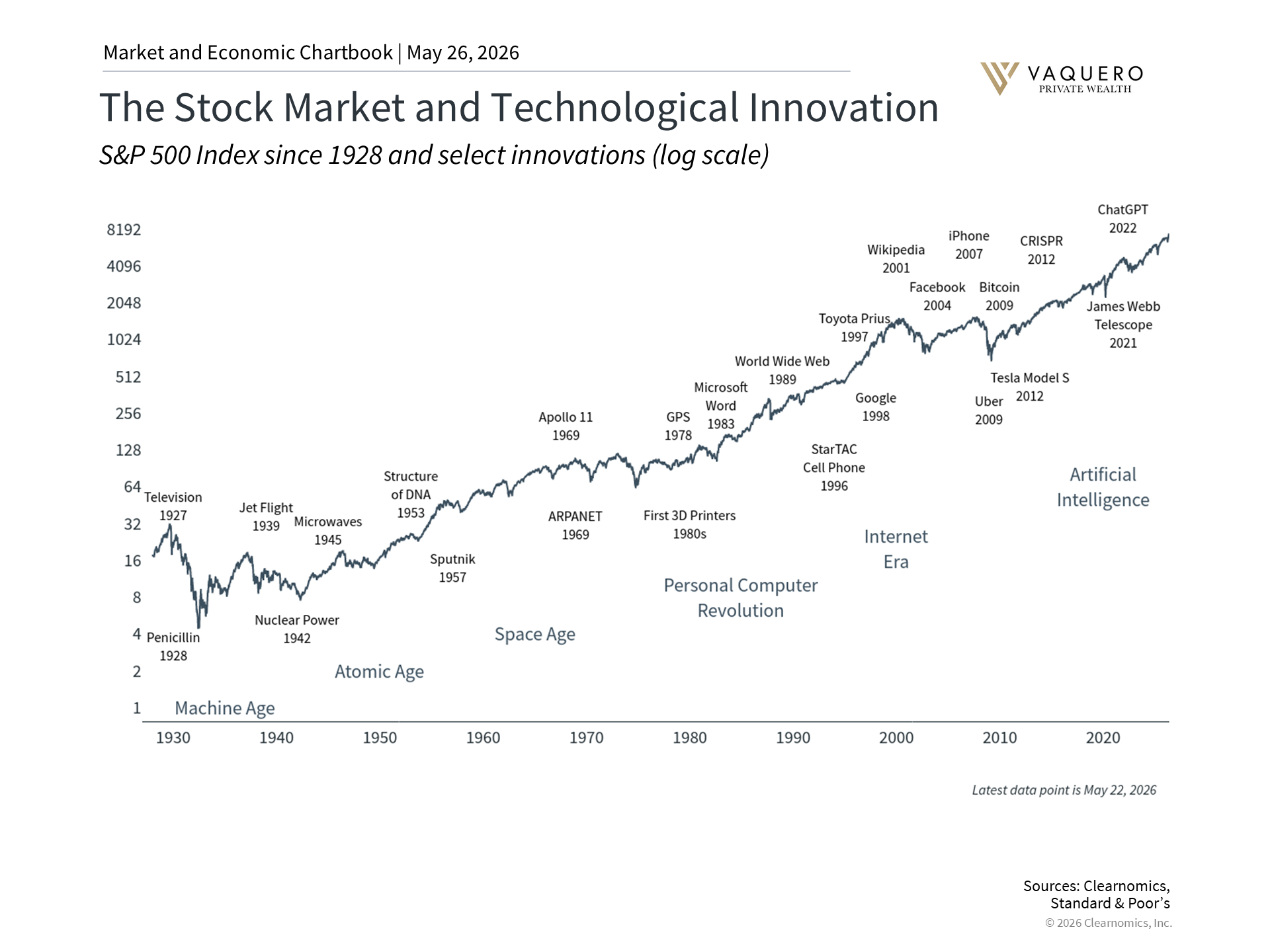
IPO activity tends to increase during periods of market strength. After years of companies remaining private longer, several high-profile firms have been reported as considering public offerings, potentially expanding the opportunity set available to investors.
While IPO headlines can be compelling, long-term investors often gain exposure to successful new companies through diversified market indices rather than attempting to time individual offerings.
Higher Interest Rates and Portfolio Implications
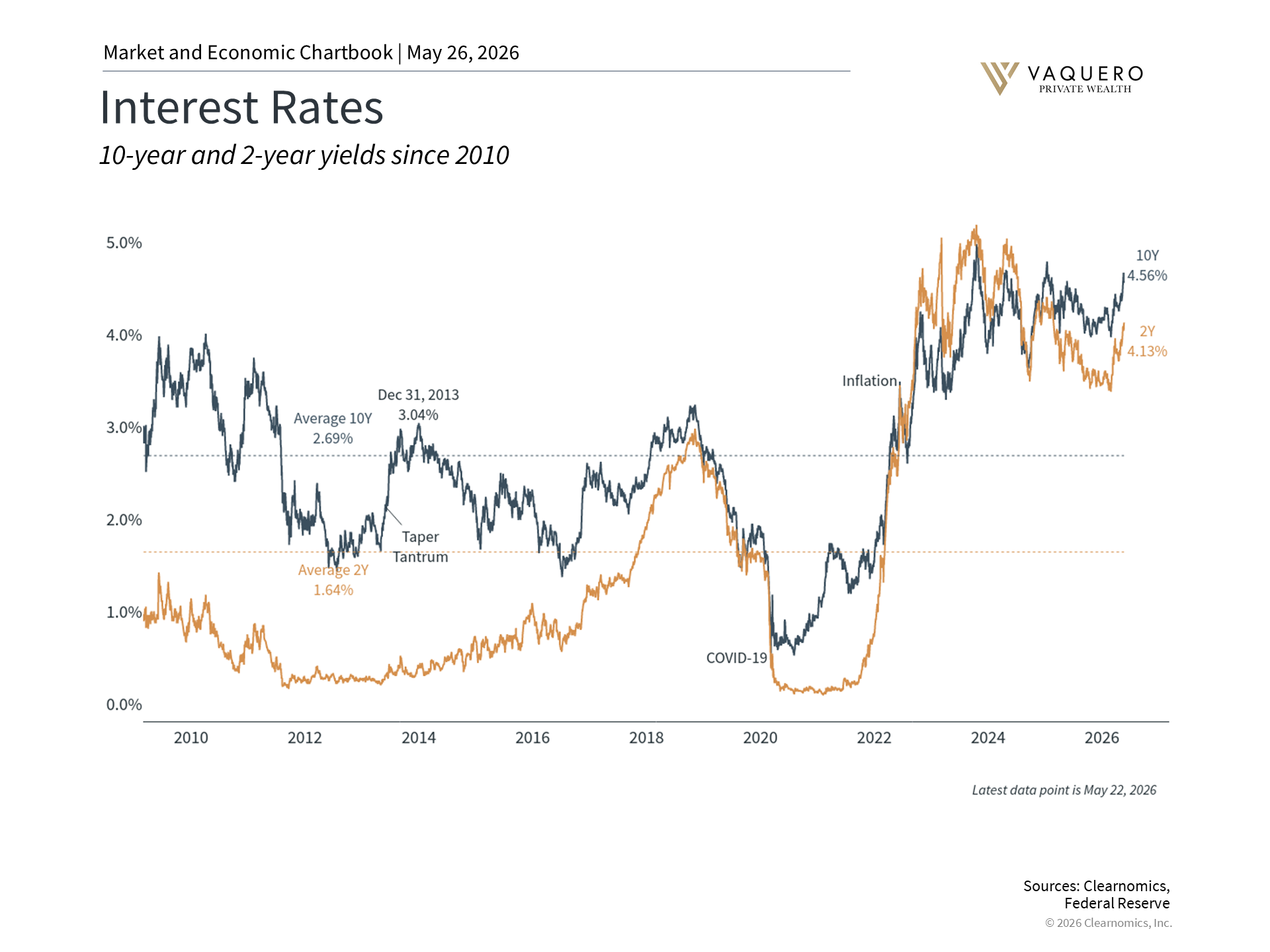
Rising long-term interest rates have created headwinds for some areas of the market while improving income opportunities in fixed income. Mortgage rates and borrowing costs have increased, affecting housing and business investment decisions.
At the same time, higher yields mean bonds now offer more meaningful income than in recent years, reinforcing their role in diversified portfolios.
The Bottom Line for Investors
Market milestones and higher interest rates underscore the importance of balance. A diversified, long-term investment strategy can help investors participate in market growth while managing risks associated with valuation, concentration, and changing economic conditions. For analysis of recent global market developments, including the U.S.-Iran peace framework and its implications for oil prices and inflation, see our latest market commentary. For families planning across generations, advanced estate planning strategies can provide the structural framework for preserving and transferring wealth efficiently.