
The Federal Reserve plays a central role in financial markets and the economy, and leadership transitions naturally draw investor attention. With Kevin Warsh confirmed as the next Federal Reserve Chair, markets are evaluating how his policy views could influence monetary decisions and long-term investment outcomes.
Warsh previously served on the Federal Reserve Board of Governors during the global financial crisis, giving him firsthand experience navigating periods of economic stress. While leadership changes can generate short-term uncertainty, history suggests that long-term market performance depends on broader economic forces.
The Economy Has Grown Under Many Fed Leaders
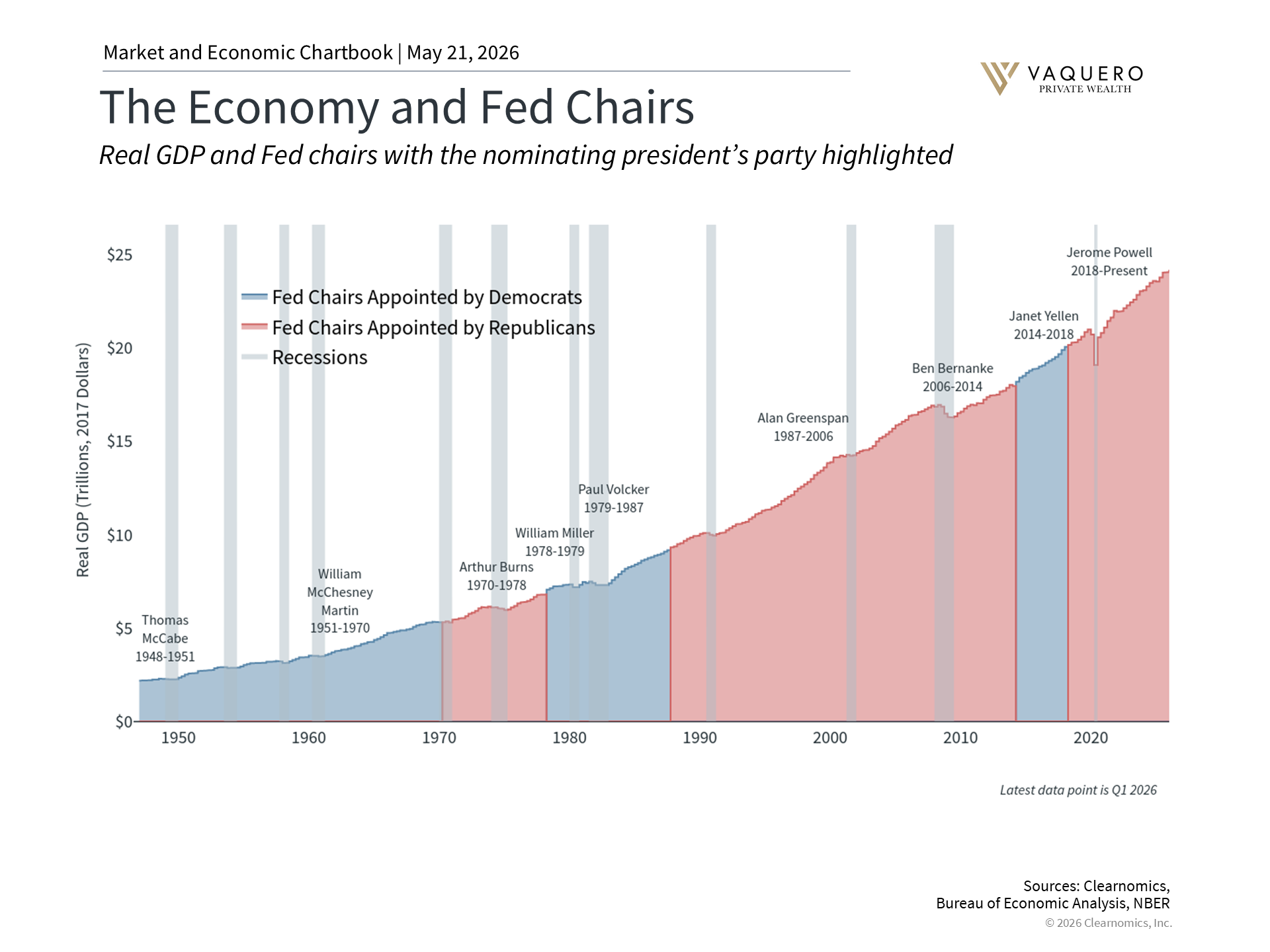
Federal Reserve chairs are appointed for fixed terms to promote independence from political pressure. Across decades, the U.S. economy has expanded under a wide range of Fed leaders, each confronting unique challenges—from stagflation and financial crises to pandemics and inflation surges.
This historical perspective underscores an important point for investors: while monetary policy matters, it is only one of many forces shaping long-term economic growth and market returns.
Kevin Warsh’s Views on a More Focused Federal Reserve
In public statements and testimony, Warsh has emphasized the importance of aligning the Fed’s powers with its core responsibilities. He has argued for preserving monetary policy independence while limiting the central bank’s involvement in areas beyond its primary mandate.
Historically characterized as an inflation hawk, Warsh has signaled a preference for maintaining price stability, even if that requires tighter financial conditions during inflationary periods.
Inflation, the Balance Sheet, and Policy Tradeoffs
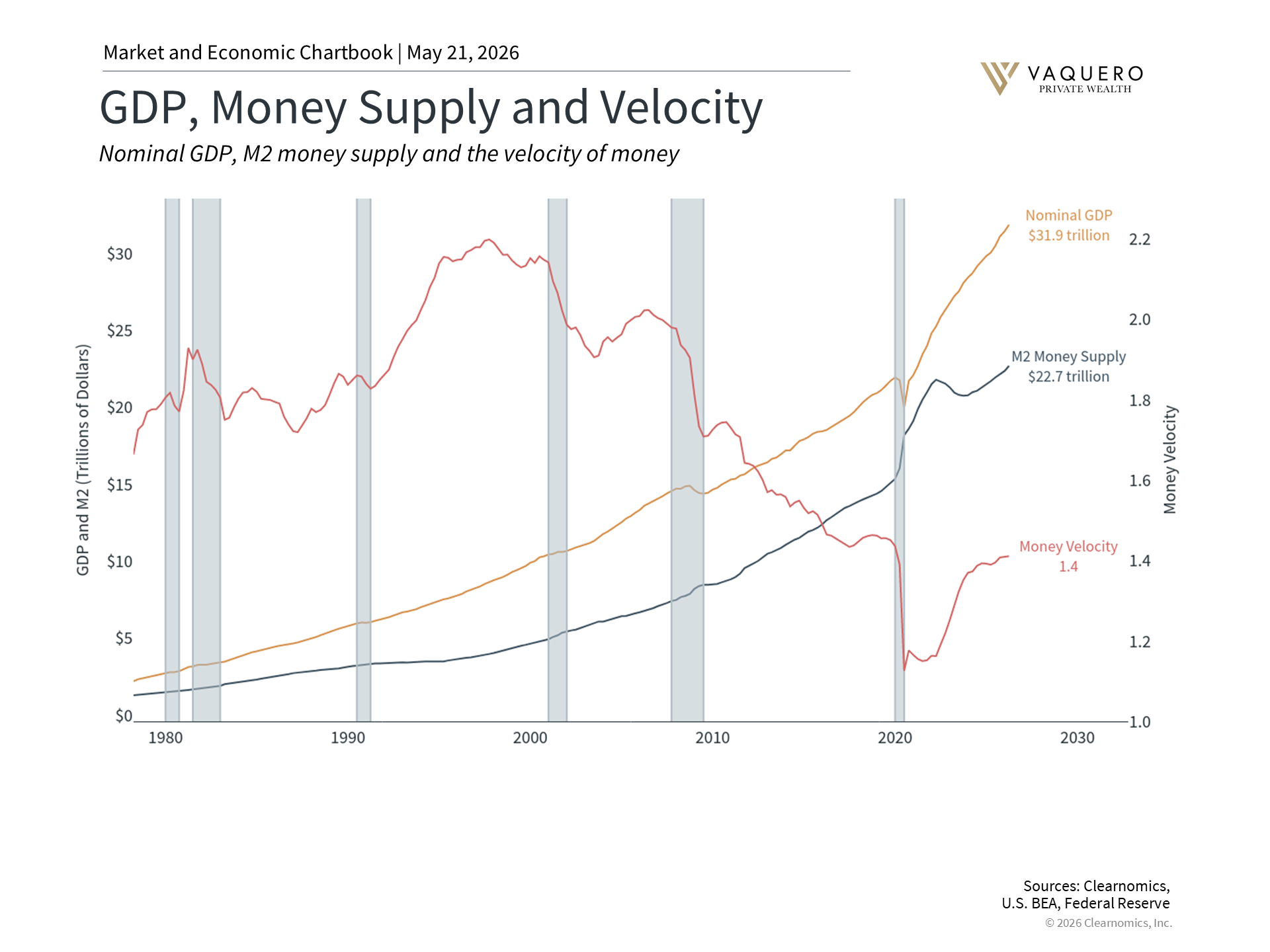
Warsh has acknowledged that crisis-era measures—such as expanding the Fed’s balance sheet—were appropriate during periods of extreme stress. However, he has also suggested that these policies should be unwound as conditions normalize.
Reducing the balance sheet, often referred to as quantitative tightening, can influence bond yields, mortgage rates, and broader financial conditions. These tools add complexity to policymaking, particularly in an environment shaped by elevated inflation and global uncertainty.
What This Means for Long-Term Investors
Inflation pressures, energy prices, and global events will continue to shape monetary policy decisions regardless of who leads the Federal Reserve. Market expectations for future rate changes may shift frequently as new data emerges.
The key takeaway for investors is perspective. Markets have performed well across many Fed leadership transitions, and changes at the top rarely alter the fundamental drivers of long-term returns—such as earnings growth, innovation, and productivity. For the latest on how markets responded during the first month of the Warsh era, see our May 2026 market update. For families with multi-generational wealth, the structural aspects of estate planning and wealth transfer deserve the same long-term perspective as investment decisions.
The bottom line: As Kevin Warsh begins his tenure as Fed Chair, maintaining a disciplined, long-term investment strategy remains the most effective way to navigate policy uncertainty.