
As summer approaches, financial markets continue to move forward regardless of seasonal rhythms. May delivered another month of strong performance across global equity markets, even as investors navigated persistent inflation concerns, elevated interest rates, and a major leadership transition at the Federal Reserve. Building on the rebound discussed in our April market update, May extended the positive momentum with new record highs across major indices.
Key Market and Economic Drivers in May
- U.S. equities posted strong gains, with the S&P 500, Nasdaq Composite, and Dow Jones Industrial Average rising 5.1%, 8.4%, and 2.8%, respectively, all ending the month at record highs.
- Market volatility declined further, with the VIX closing May near 15.
- International markets advanced, led by emerging markets, which significantly outperformed developed markets.
- Treasury yields moved higher amid inflation concerns, with the 30-year Treasury briefly exceeding 5% before moderating.
- Energy prices declined, easing some inflationary pressures.
Interest Rates Remain a Central Focus
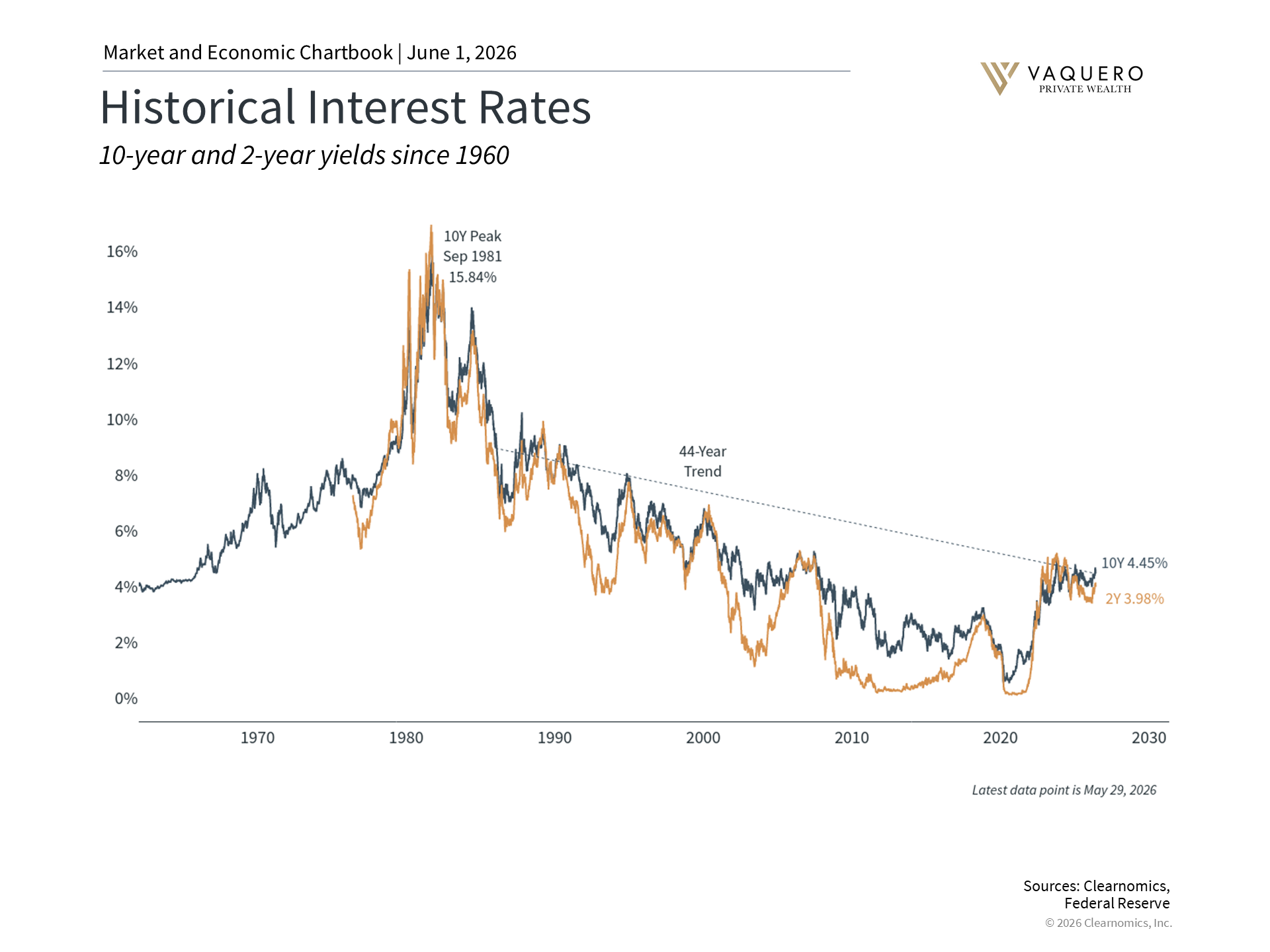
Inflation and interest rate expectations dominated market conversations throughout May. While yields retreated from their highs, borrowing costs remain elevated relative to recent history, influencing consumer behavior, business investment, and asset valuations.
For investors, higher yields have reintroduced income opportunities in fixed income, reinforcing the role of bonds in diversified portfolios.
Stocks Reached New All-Time Highs
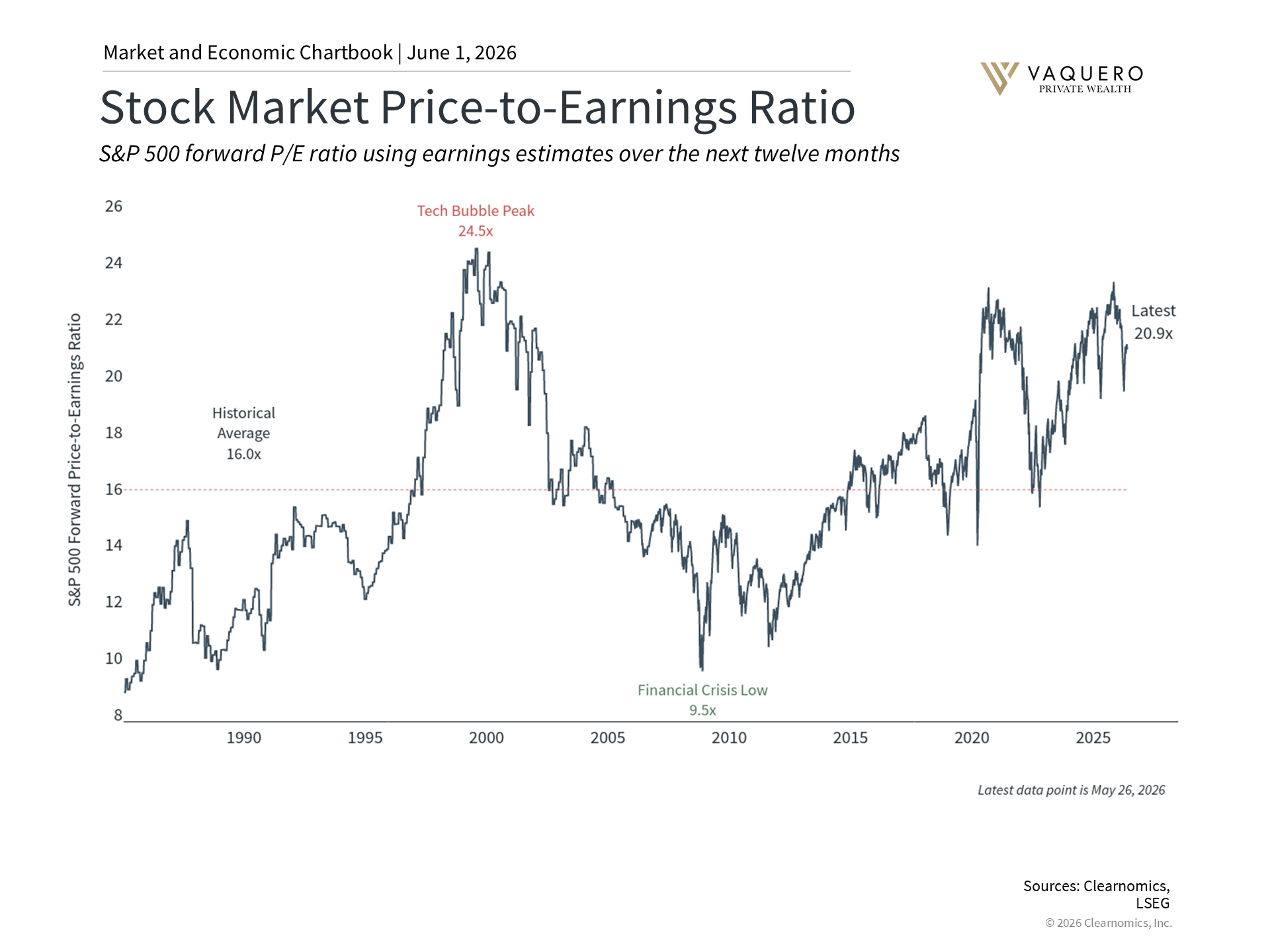
The S&P 500 surpassed 7,500 during May, marking more than twenty all-time highs so far this year. While large technology companies continued to contribute meaningfully, market participation broadened compared to prior years.
Strong corporate earnings growth has helped support valuations, though elevated price levels underscore the importance of diversification and long-term discipline.
A New Chapter at the Federal Reserve
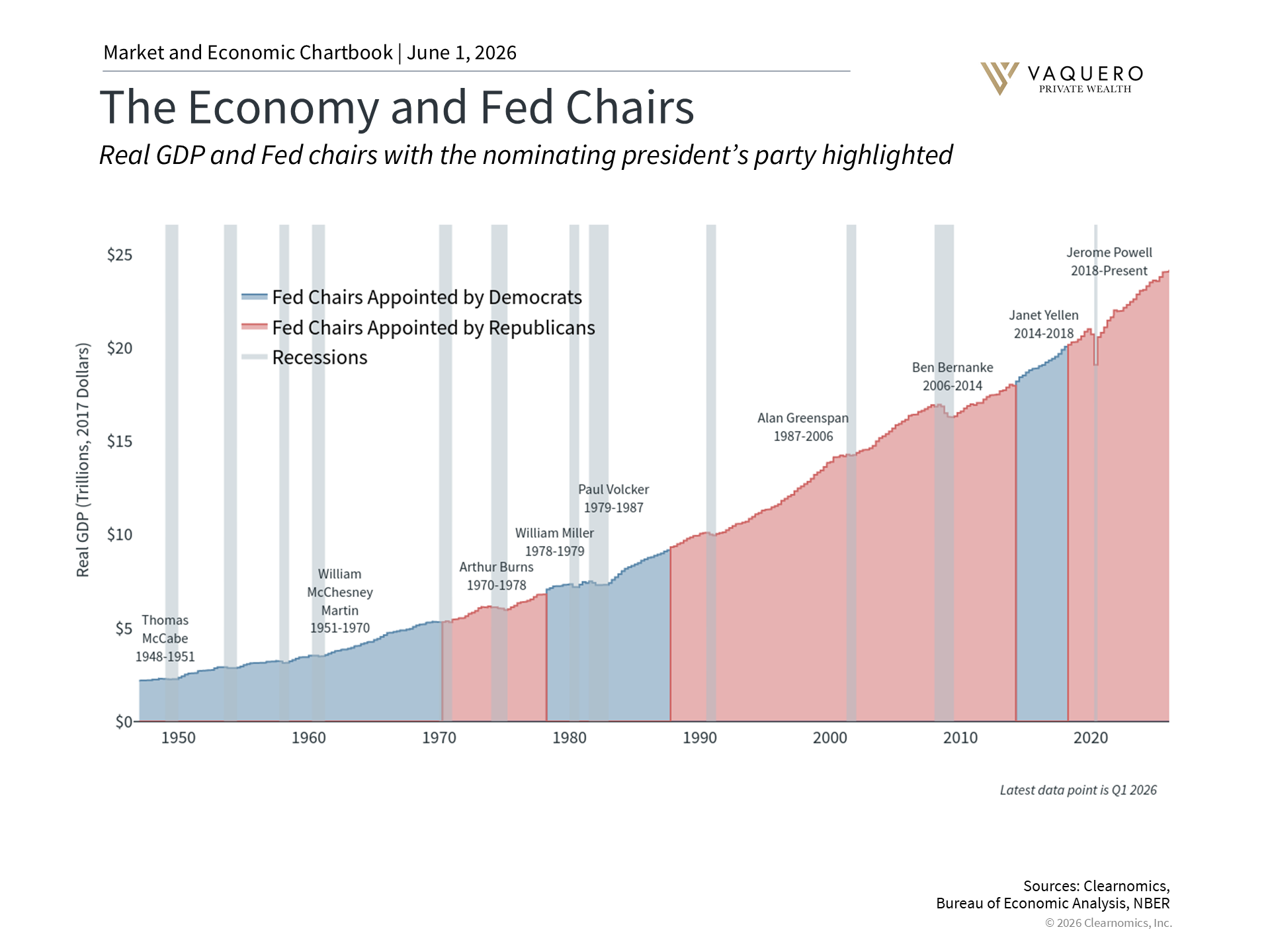
May also marked the beginning of Kevin Warsh’s tenure as Federal Reserve Chair. Leadership changes at the central bank are rare, and investors are assessing how policy priorities may be implemented in an environment shaped by persistent inflation and moderating economic growth. For a deeper look at what this transition could mean for portfolios, see our analysis on Kevin Warsh as Fed Chair.
While monetary policy decisions can influence markets in the short term, long-term outcomes continue to be driven by earnings growth, innovation, and productivity.
The Bottom Line for Investors
Markets entered the second half of the year from a position of strength. Record equity highs, elevated interest rates, and evolving monetary policy highlight the importance of maintaining a diversified, long-term investment strategy capable of navigating a wide range of outcomes.
For investors tracking the latest geopolitical developments and market impact, our special update on the U.S.-Iran peace framework examines what the preliminary agreement means for oil prices, inflation, and diversified portfolios.